
What Is Dead Woman’s Pass?
Dead Woman’s Pass is a high mountain pass on the Classic Inca Trail in Peru. It is not an archaeological site, but a natural landmark that marks the highest elevation point of the trek.
The name Warmiwañusca is commonly translated as “Dead Woman” or “Dead Woman’s Pass.” The name is believed to come from the shape of the surrounding mountain landscape, which from certain angles resembles the profile of a woman lying down.
This section is especially important because it separates the easier first part of the trek from the more demanding high-altitude mountain section. Once hikers reach the top, they usually descend toward the Pacaymayo Valley.
Dead Woman’s Pass Altitude
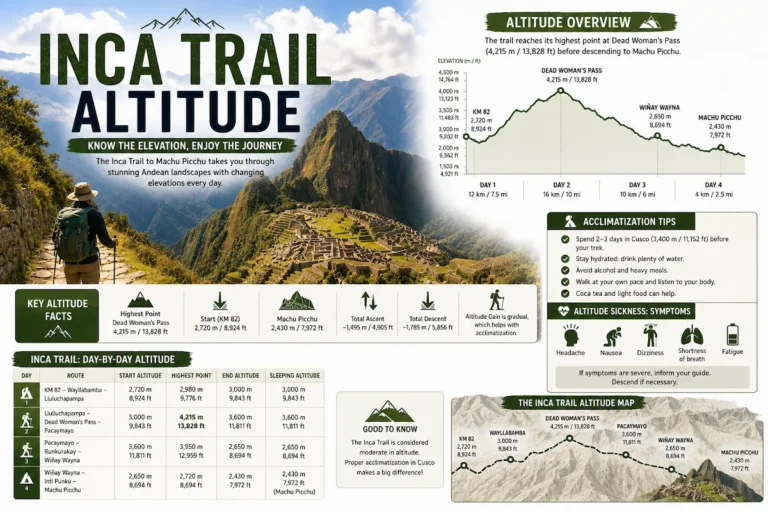
Dead Woman’s Pass sits at approximately 4,215 meters / 13,828 feet above sea level. This makes it higher than Cusco and much higher than Machu Picchu itself.
| Place | Approximate Altitude |
|---|---|
| Machu Picchu | 2,430 m / 7,972 ft |
| Cusco | 3,400 m / 11,155 ft |
| Dead Woman’s Pass | 4,215 m / 13,828 ft |
Because of this altitude, some travelers may feel shortness of breath, fatigue, headache, or symptoms of altitude sickness during the climb. Proper acclimatization before starting the Inca Trail is very important.
Why Is Dead Woman’s Pass So Difficult?
Dead Woman’s Pass is difficult because of three main factors: altitude, steepness, and endurance.
The trail climbs gradually but continuously for several hours. As hikers get closer to the pass, the air becomes thinner and the slope feels more demanding. Even travelers with good fitness levels may need to slow down because the body has less oxygen available at this elevation.
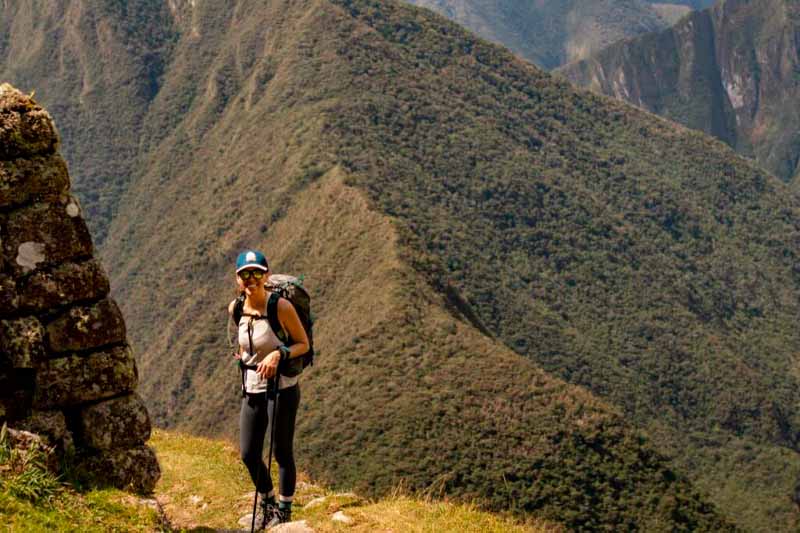
The trail includes stone paths, uneven steps, mountain terrain, and exposed sections where the weather can change quickly. The climb does not require technical climbing skills, but it does require patience, mental strength, and a steady pace.
For many people, the descent after the pass is also challenging. Going down toward Pacaymayo can be hard on the knees, especially after several hours of uphill hiking.
When Do You Cross Dead Woman’s Pass?
Dead Woman’s Pass is usually crossed on Day 2 of the classic 4-day Inca Trail. This day is often considered the hardest day of the entire trek.
Most itineraries begin early in the morning from the campsite near Ayapata or Llulluchapampa, depending on the operator’s route. From there, hikers continue uphill until reaching the pass. After a short rest at the top, the route descends toward the next campsite or valley area.
Day 2 is physically demanding, but it is also one of the most memorable parts of the Inca Trail.
How Long Does It Take to Reach Dead Woman’s Pass?
The time depends on each hiker’s fitness, acclimatization, and walking pace. On average, the climb to Dead Woman’s Pass can take around 4 to 6 hours from the morning campsite.
Some hikers reach the top faster, while others take more time. The most important thing is not speed, but consistency. A slow and steady pace is much better than walking too fast and becoming exhausted.
Taking short breaks, drinking water, and breathing deeply can make the climb more manageable.
Weather at Dead Woman’s Pass
The weather at Dead Woman’s Pass can change very quickly. Hikers may experience sun, cold wind, fog, rain, or even hail depending on the season.
Because the pass is located at high altitude, temperatures can feel much colder than in the valleys. Even if the morning starts warm, the top of the pass can be windy and cold.
The dry season, from May to September, usually offers better hiking conditions, clearer skies, and less rain. The rainy season, from November to March, can bring slippery trails, muddy paths, and reduced visibility. The Inca Trail is usually closed in February for maintenance.
Can You Get Altitude Sickness at Dead Woman’s Pass?
Yes, altitude sickness can happen at Dead Woman’s Pass because the elevation is above 4,000 meters. Common symptoms include headache, nausea, dizziness, tiredness, loss of appetite, and shortness of breath.
To reduce the risk, it is recommended to spend at least 2 days in Cusco or the Sacred Valley before starting the Inca Trail. Travelers should also avoid alcohol before the trek, drink enough water, eat light meals, and walk slowly.
If symptoms become strong, hikers should tell their guide immediately. Licensed Inca Trail guides are trained to assist travelers during the route.
How to Prepare for Dead Woman’s Pass
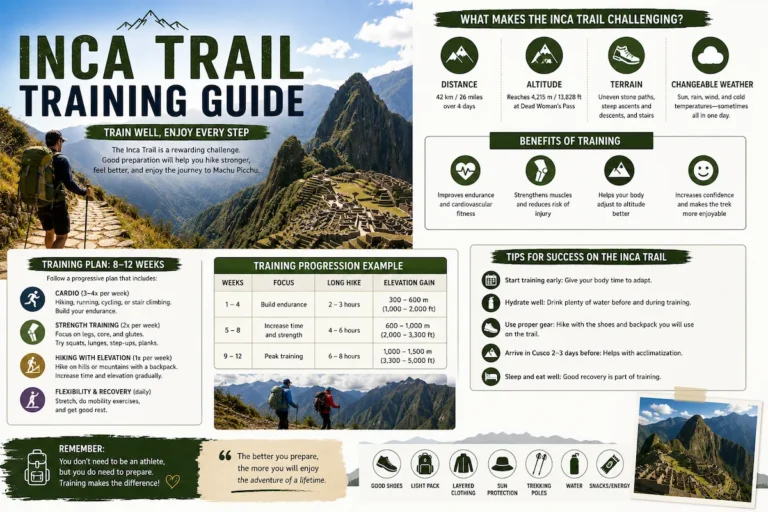
The best preparation for Dead Woman’s Pass is a mix of hiking practice, cardio training, leg strength, and acclimatization.
You do not need to be a professional athlete, but you should be comfortable walking for several hours on mountain terrain. Before your trip, it helps to train with long walks, stair climbing, uphill hikes, and light backpack practice.
It is also important to wear your hiking boots before the trek. New boots can cause blisters, especially on long uphill and downhill sections.
The best strategy during the trek is simple: walk slowly, breathe deeply, and do not compete with other hikers.
What to Pack for Dead Woman’s Pass
For this section of the Inca Trail, layered clothing is essential. The climb may feel warm, but the top of the pass can be very cold and windy.
Recommended items include:
- Waterproof jacket
- Warm fleece or insulated layer
- Hiking pants
- Hat and gloves
- Sunglasses
- Sunscreen
- Reusable water bottle
- Energy snacks
- Trekking poles
- Comfortable hiking boots
- Rain cover for your backpack
- Coca candies or coca leaves, if suitable for you
Trekking poles are especially helpful for the descent after Dead Woman’s Pass.
Tips for Reaching the Top
Start slowly. Many hikers use too much energy at the beginning of the climb and struggle near the top. It is better to keep a calm and steady rhythm from the start.
Take short breaks, but avoid stopping for too long in cold areas. Small steps are very useful on the steeper parts of the trail.
When you reach the top, put on a warm layer before taking photos. The wind can be strong and the temperature can drop quickly.
Most importantly, enjoy the moment. Reaching Dead Woman’s Pass is a major achievement on the Inca Trail.
Is Dead Woman’s Pass Worth It?
Yes, Dead Woman’s Pass is absolutely worth it. Although it is the hardest part of the Inca Trail, it is also one of the most rewarding.
For many travelers, this is the moment when they truly feel the power of the Andes. The combination of effort, altitude, scenery, and emotion makes it unforgettable.
Crossing Dead Woman’s Pass is not just about reaching a high point on the trail. It is about overcoming a challenge and continuing the ancient path toward Machu Picchu.
Dead Woman’s Pass vs Machu Picchu
Many travelers think Machu Picchu is the highest point of the journey, but this is not true. Dead Woman’s Pass is much higher than Machu Picchu.
Machu Picchu sits at around 2,430 meters / 7,972 feet, while Dead Woman’s Pass reaches about 4,215 meters / 13,828 feet. This is why the Inca Trail can feel much more physically demanding than the actual visit to Machu Picchu.
By the time hikers arrive at Machu Picchu, they are usually at a lower altitude and breathing feels easier.
Can You Visit Dead Woman’s Pass Without a Guide?
No. Dead Woman’s Pass is part of the regulated classic Inca Trail route. Travelers cannot hike this route independently.
To visit Dead Woman’s Pass, you need an official Inca Trail permit, a licensed tour operator, and an authorized guide. Permits are limited and should be booked in advance, especially during the high season.
Best Time to Cross Dead Woman’s Pass
The best time to cross Dead Woman’s Pass is during the dry season, from May to September. These months usually offer better weather, less rain, and clearer mountain views.
April and October can also be good months because they are shoulder-season periods. There may be fewer crowds, although some rain is still possible.
The rainy season, from November to March, can make the trail more difficult because of mud, slippery stones, and cloudy weather.
FAQs About Dead Woman’s Pass
Is Dead Woman’s Pass dangerous?
Dead Woman’s Pass is not usually dangerous when done with a licensed guide, proper acclimatization, and a responsible pace. The main challenge is altitude and physical effort.
Do I need experience to hike Dead Woman’s Pass?
You do not need technical climbing experience, but you should have a moderate fitness level and be prepared for several hours of uphill hiking.
Is Dead Woman’s Pass the hardest part of the Inca Trail?
Yes, for most hikers, Dead Woman’s Pass is the hardest part of the Inca Trail because of its high altitude, long uphill climb, and steep terrain.
Can I hike Dead Woman’s Pass without a permit?
No. Since it is part of the classic Inca Trail, you need an official permit and must hike with an authorized tour operator.
How should I avoid altitude sickness?
Spend at least 2 days in Cusco or the Sacred Valley before the trek, drink plenty of water, avoid alcohol, eat light meals, and walk slowly during the climb.