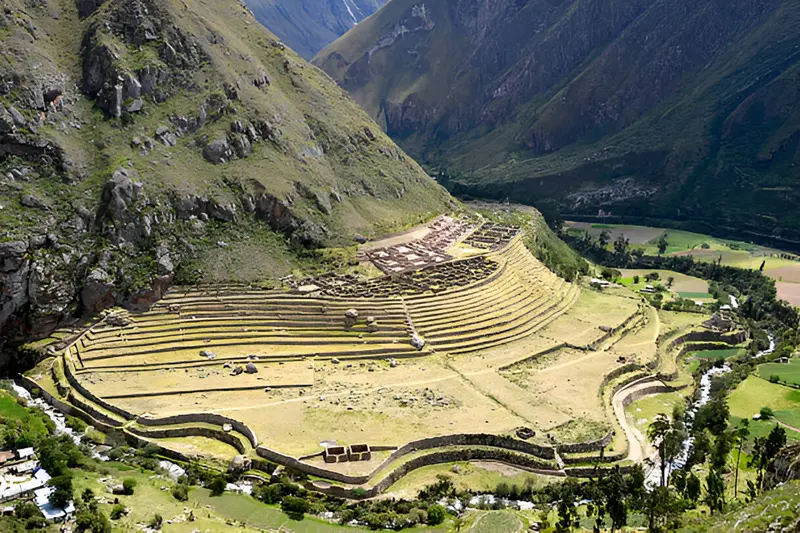
01Day 1
Patallacta
Also called Llactapata in many trail guides, this terraced settlement opens the archaeological sequence near the beginning of the Classic Inca Trail.
 Alt 4,215 m
Archaeology along the route
Walk through the archaeological story of the Classic Inca Trail, from early terraced settlements to the final approach through Intipunku.
Part of a continental system
The path to Machu Picchu belongs to the broader tradition of the Qhapaq Ñan. This Andean road system connected centers of government, production, accommodation and worship across difficult terrain. On the Classic Inca Trail, stone paving, stairways, drainage and architecture work together as one cultural landscape.
The route reached its greatest development during the expansion of Tawantinsuyu in the 15th century, while also drawing on older Andean knowledge and infrastructure.
Read the UNESCO Qhapaq Ñan overview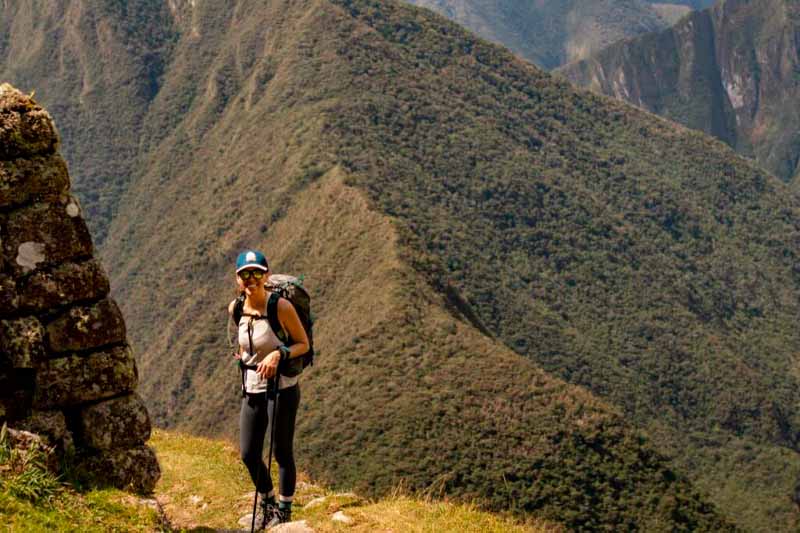
A four-day archaeological sequence
The sites are not isolated attractions. Their position, water systems and relationship to the road reveal how movement through the Andes was organized.
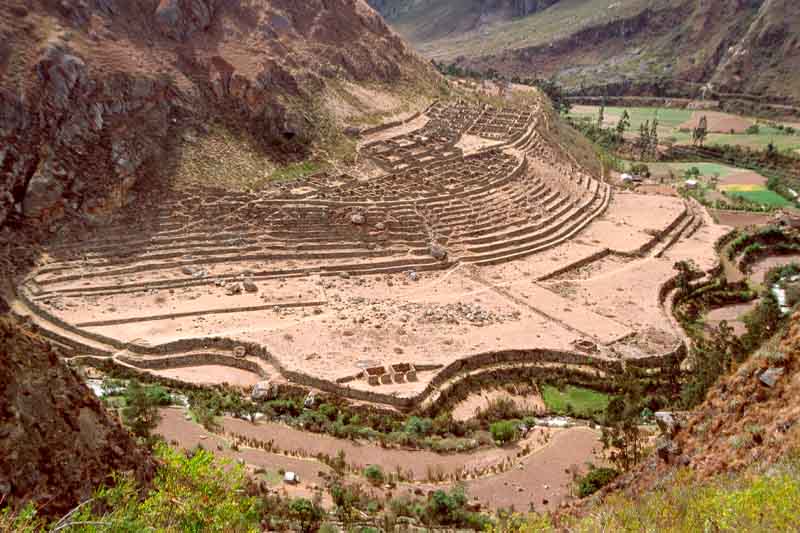
Also called Llactapata in many trail guides, this terraced settlement opens the archaeological sequence near the beginning of the Classic Inca Trail.
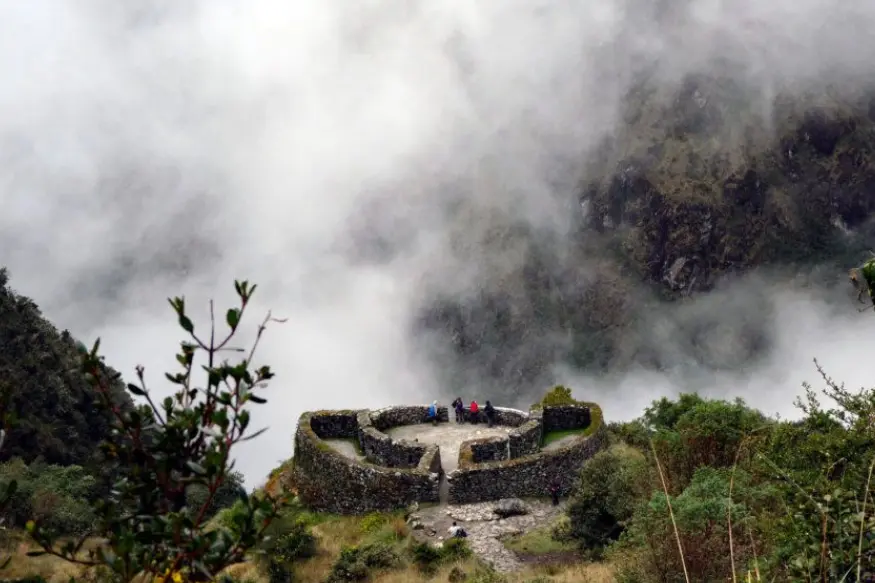
A compact circular complex above the valley, commonly interpreted as a stopping place connected to movement through the high mountain corridor.
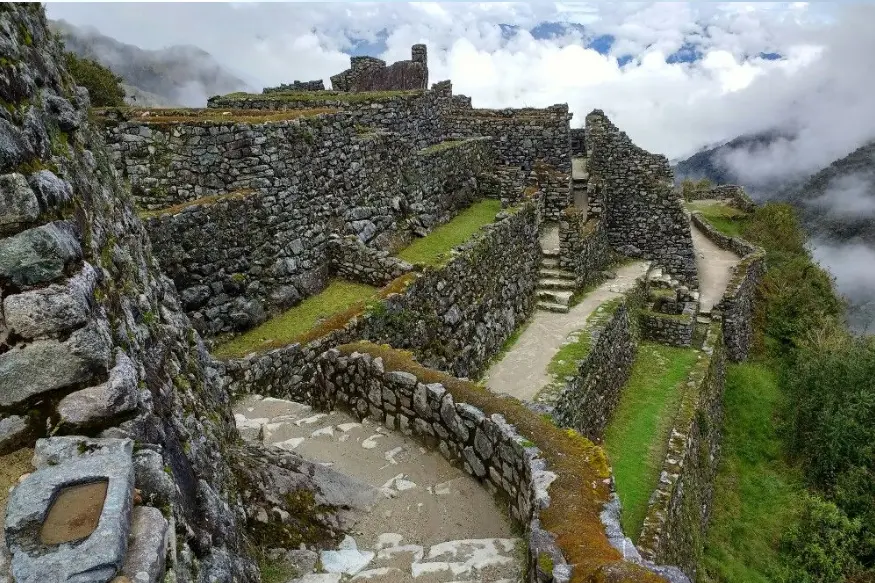
Reached by stone steps on a narrow ridge, its plazas, passages and elevated setting reveal careful adaptation to difficult terrain.
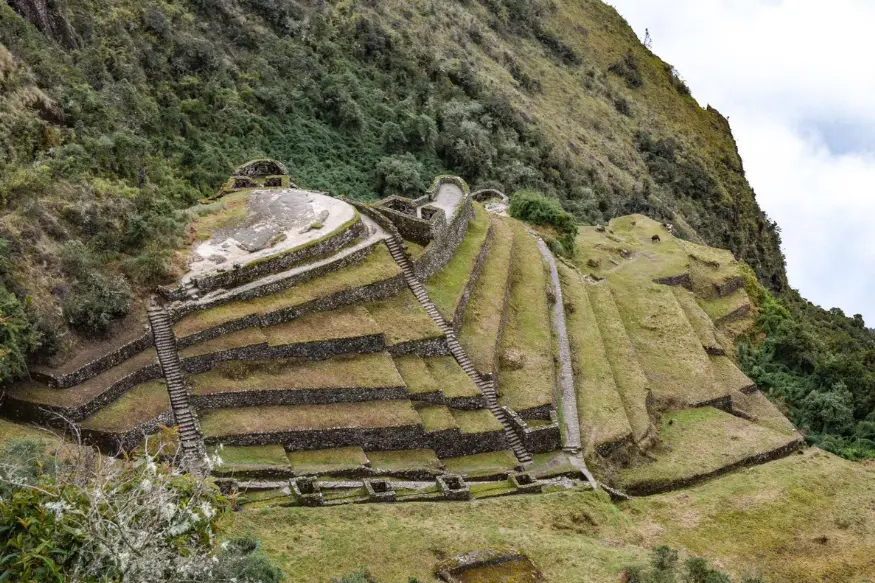
The “Town Above the Clouds” combines terraces, ritual spaces and a sophisticated sequence of water channels and fountains.
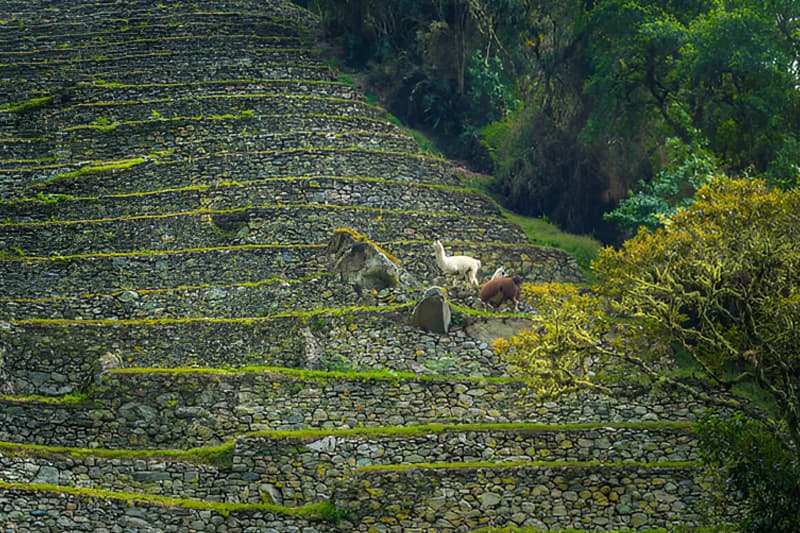
Sweeping agricultural terraces surround residential and ceremonial structures just before the final approach to Machu Picchu.

The Sun Gate frames the first elevated view of Machu Picchu for hikers completing the historic approach on foot.
Read the details
What looks beautiful was also functional. Each solution responds to steep slopes, heavy rain, water access or the meaning of the surrounding landscape.
Built surfaces created durable movement across steep and uneven ground.
Channels controlled rainfall and directed water through ceremonial and residential areas.
Terraces stabilized slopes, managed soil and created productive space.
Architecture aligns the human journey with peaks, valleys, water and changing horizons.

The final threshold
After days of following the old road, hikers cross the Sun Gate and see Machu Picchu from above. The arrival gives the route its narrative shape: the citadel is revealed gradually rather than reached as a single stop.
Explore IntipunkuHistory and ruins FAQs
A little context makes every archaeological stop more meaningful.
The principal archaeological sites include Patallacta, Runkurakay, Sayacmarca, Phuyupatamarca, Wiñay Wayna and Intipunku before the final entrance to Machu Picchu.
Yes. The route belongs to the wider tradition of the Qhapaq Ñan, the Andean road system that connected administrative, productive and sacred places across the Inca world.
Some sites are exclusive to regulated trekking routes and cannot be reached by road or train. Wiñay Wayna and several sites on the Classic Inca Trail are experienced as part of an authorized trek.
Terraces stabilized steep slopes and supported cultivation, while carefully planned channels managed water. Together they show how Inca engineering adapted architecture to the mountain landscape.
Walk through the history
Save your favorite Inca Trail routes and plan your journey to Machu Picchu.
Don’t have an account yet?