Español

How to Plan the Inca Trail to Machu Picchu

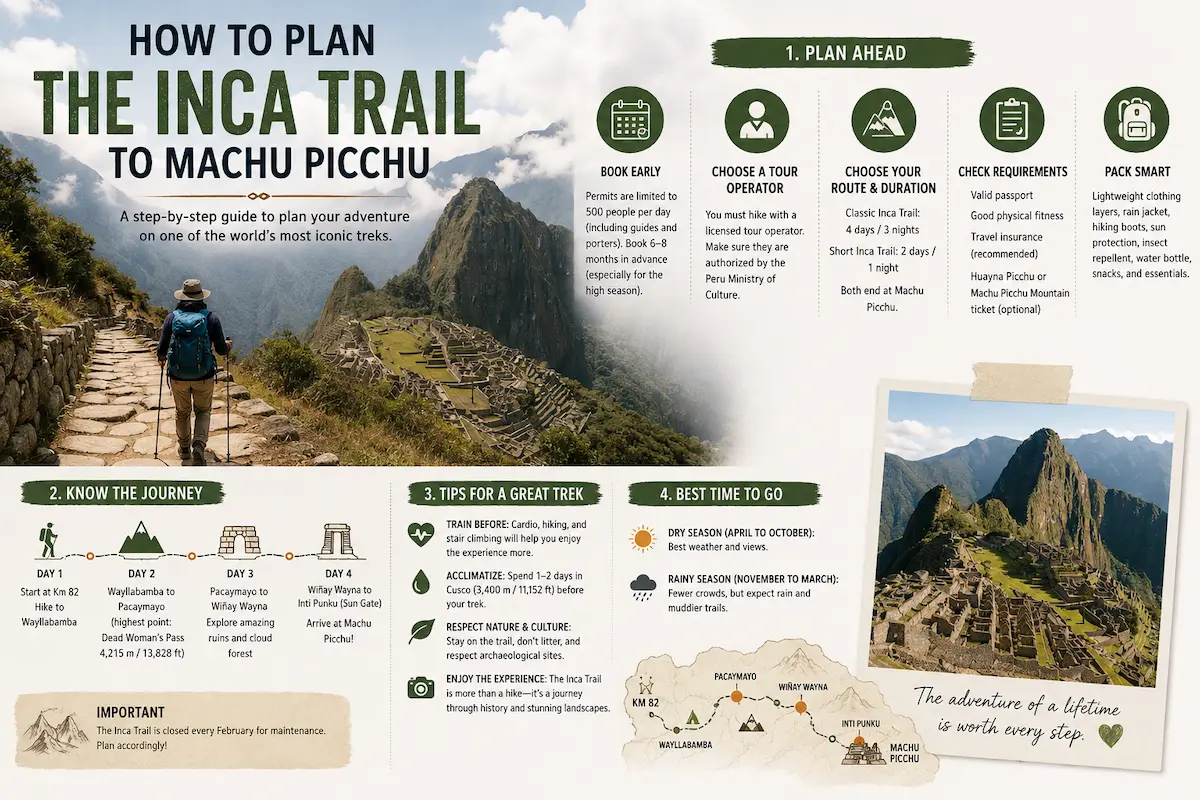
Planning the Inca Trail to Machu Picchu requires more preparation than a regular day hike in Peru. You need to think about permits, your travel dates, physical preparation, altitude, what to pack, and how many days you should spend in Cusco before starting the trek.

The good news is that you do not need to make the process complicated. Once you understand what needs to be arranged first, the rest of the trip becomes much easier to organize.

This guide explains how to plan the Inca Trail step by step, from choosing your dates to arriving prepared for the first day of the hike.

By: Jhoel
How to Plan the Inca Trail to Machu Picchu

Start Planning the Inca Trail Early

The first step is choosing approximately when you want to travel.

Unlike many hikes around Cusco, access to the Inca Trail is controlled. You cannot simply arrive at the trailhead and start hiking independently.

For this reason, your trekking dates should be one of the first parts of your Peru itinerary that you confirm.

If your travel dates are flexible, first check the best time to hike the Inca Trail. Weather, trail conditions, demand, and visibility can vary considerably throughout the year.

Once you have selected a period, you can begin checking permit availability.

Check Inca Trail Permit Availability

Permits are one of the most important parts of planning the trek.

Access to the route is limited, and travelers must enter through an authorized trekking operator. Your permit is registered using your personal information, so you will normally need to provide your passport details when making the reservation.

Popular dates can fill well before the trekking date.

Read our complete guide to Inca Trail permits to understand availability, booking requirements, and what information you need to reserve your place.

Do not book the rest of your Peru itinerary around the trek until you know your Inca Trail dates are possible.

Choose the Right Inca Trail Route

Not every traveler needs to hike the same itinerary.

The two main options are the Classic Inca Trail and the Short Inca Trail.

RouteTypical DurationCampingPhysical DemandBest For
Classic Inca Trail4 daysYesModerate to challengingTravelers wanting the complete trekking experience
Short Inca Trail2 daysNo traditional multi-day campingModerateTravelers with less time
Extended variations5 days or moreUsuallyModerate to challengingTravelers wanting a slower itinerary

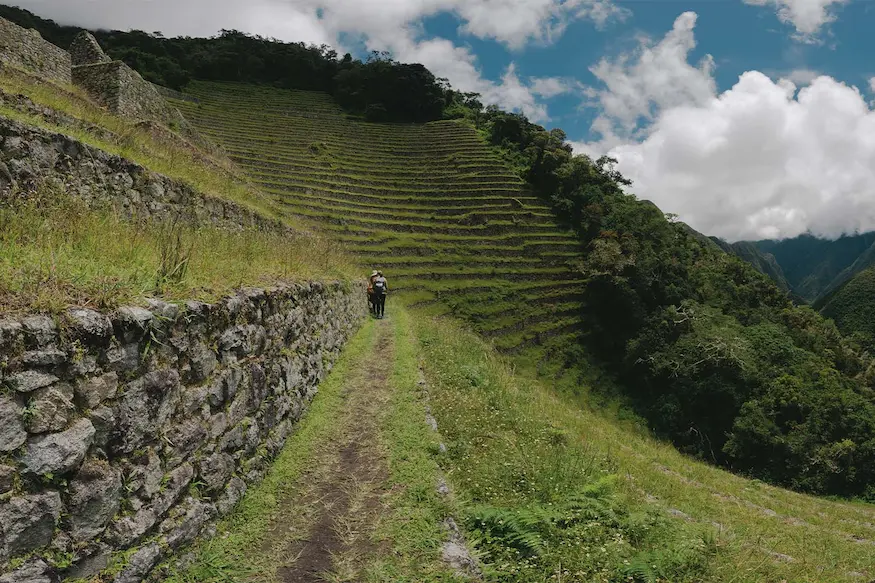
The Classic Inca Trail 4 Days is the traditional option. It crosses mountain passes, archaeological sites, valleys, and cloud forest before approaching Machu Picchu.

The Short Inca Trail 2 Days covers a smaller section of the historical trail and is a practical alternative if you have limited time.

If you are unsure which route fits you, compare the Short Inca Trail vs Classic Inca Trail before booking.

Understand the Inca Trail Difficulty

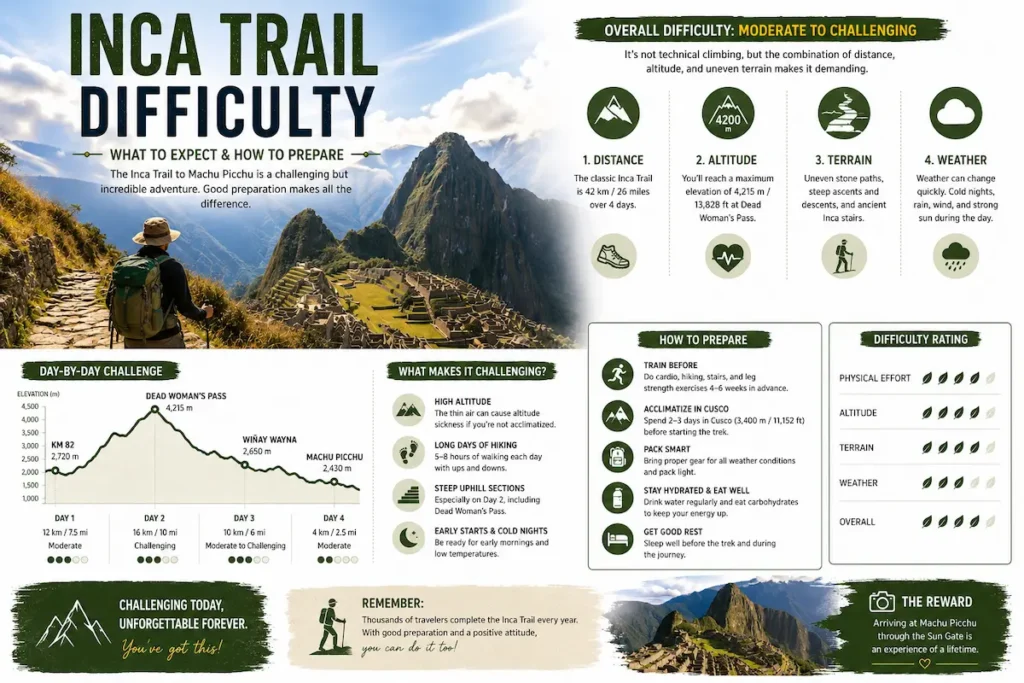
You do not need to be an experienced mountaineer to complete the Classic Inca Trail, but you should arrive physically prepared.

The route includes long climbs, steep stone staircases, descents, uneven terrain, and several hours of walking each day.

Altitude makes these sections more demanding.

The highest point of the Classic route is Dead Woman’s Pass, also known as Warmiwañusca, at approximately 4,215 meters above sea level.

For a more detailed breakdown of the terrain and physical demands, read our guide to Inca Trail difficulty.

Knowing what the trail involves will help you decide how much training you need before traveling.

Train Before Your Trip

You do not need extreme training, but regular preparation can make the trek much more comfortable.

Start walking and exercising several weeks before your trip.

Focus on:

  • Long walks

  • Hiking on hills

  • Stair climbing

  • Cardiovascular exercise

  • Leg strength

  • Walking with a small daypack

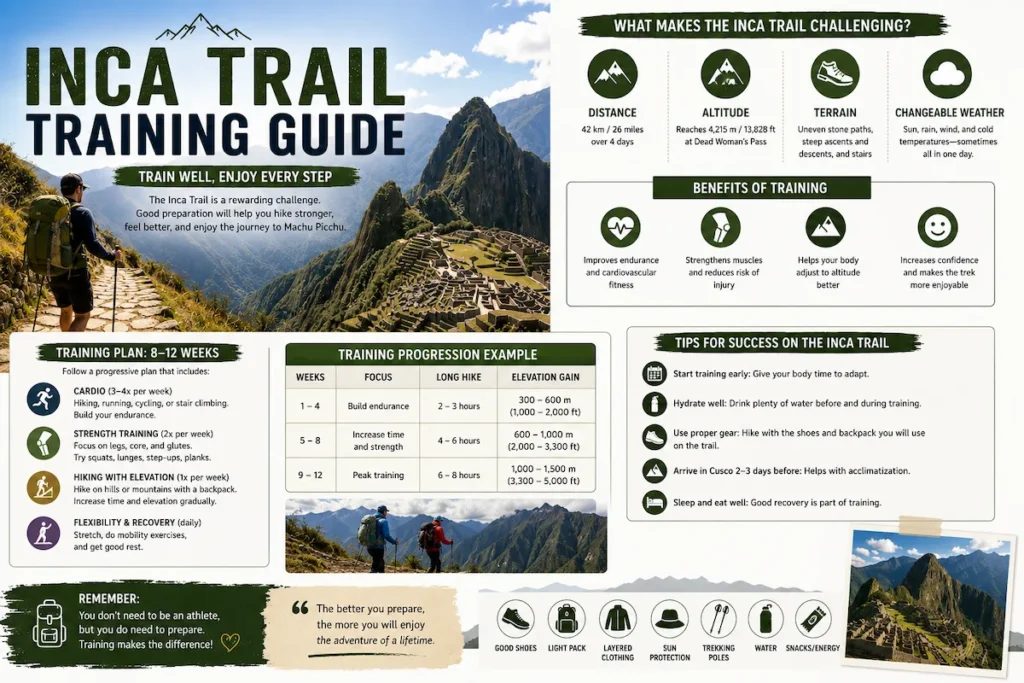
Whenever possible, practice on trails with elevation changes rather than only walking on flat surfaces.

Our Inca Trail training guide explains how to prepare your body for the climbs, descents, and consecutive hiking days.

Spend Time Acclimatizing in Cusco

Physical fitness does not protect you completely from altitude.

Cusco sits at approximately 3,400 meters above sea level, and parts of the Inca Trail climb considerably higher.

Arriving in Cusco and beginning the trek immediately is usually not the best plan.

Try to spend at least a few days in Cusco or the Sacred Valley before starting the hike. During this period, keep your first activities relatively easy, stay hydrated, rest properly, and observe how your body responds to the elevation.

Understanding Inca Trail altitude before traveling will help you plan your acclimatization days more effectively.

Build the Inca Trail Into Your Peru Itinerary

Do not treat the trek as an isolated four-day activity.

Your itinerary before and after the hike matters.

A simple structure could look like this:

DayPlan
Day 1Arrive in Cusco
Day 2Acclimatization and easy sightseeing
Day 3Sacred Valley or another moderate activity
Day 4Final preparation
Days 5–8Classic Inca Trail
Day 9Rest or continue your Peru trip

You may need more acclimatization time if you are arriving directly from a low-altitude destination.

Avoid scheduling demanding activities immediately before the trek.

Understand the Weather

Weather conditions on the Inca Trail change with the season and altitude.

The dry season generally provides more stable hiking conditions, while the wetter months can bring more rain, clouds, mud, and reduced visibility.

Even during relatively dry periods, mountain weather can change quickly.

You may experience sunshine, wind, cold conditions, clouds, and rain during the same trek.

Check our complete Inca Trail weather guide when deciding what conditions to expect during your travel month.

Pack for Changing Conditions

Packing light is important, but being prepared for changing weather is equally important.

Your basic equipment should normally include:

  • Hiking shoes or boots

  • Lightweight hiking pants

  • Moisture-wicking shirts

  • Warm layers

  • Waterproof jacket

  • Sun hat

  • Warm hat

  • Sunglasses

  • Sunscreen

  • Small backpack

  • Reusable water bottle

  • Personal medication

  • Headlamp

  • Comfortable socks

Avoid carrying unnecessary items.

The trail includes significant climbing, so additional weight becomes noticeable quickly.

Use our complete Inca Trail packing list before leaving home so you can check your clothing, equipment, documents, and personal items.

Calculate Your Inca Trail Budget

The price of hiking the Inca Trail is not determined only by the trek itself.

Your total budget may include:

  • Trek package

  • Flights to Peru

  • Transportation to Cusco

  • Hotels before and after the trek

  • Equipment rental

  • Travel insurance

  • Personal expenses

  • Tips

  • Additional tours

Prices can also vary according to the itinerary, service level, group size, and operator.

See our guide to Inca Trail cost for a clearer breakdown of the expenses you should consider when preparing your travel budget.

Prepare Your Documents

Check your documents before traveling to Peru.

The passport information used for your reservation should match the document you will use during your trip.

Keep your important travel information accessible rather than buried inside your luggage.

Before leaving for the trek, verify:

  • Passport

  • Trek reservation

  • Travel insurance details

  • Emergency contact information

  • Hotel information

  • Necessary travel documents

If you renew or replace your passport after booking the trek, contact your trekking operator before traveling.

Know What You Will Carry

On the Classic Inca Trail, you normally hike with a daypack containing the items you need during the day.

This may include water, sunscreen, rain protection, a camera, snacks, personal medication, and an extra layer.

Depending on your trekking service, porters may transport part of the camping equipment and permitted personal belongings.

Understanding how Inca Trail porters work will help you decide what belongs in your daypack and what can be carried separately.

Prepare for Basic Facilities

The Inca Trail is not a hotel-to-hotel trek.

Facilities along the route are basic.

On the Classic route, you will spend several nights camping. Bathroom facilities vary by location, and you should not expect the same level of comfort you would have in Cusco or Aguas Calientes.

Knowing this before the trek makes the experience easier.

You can read more about Inca Trail campsites and what sleeping on the route is actually like.

Plan Your Arrival at Machu Picchu

One of the main differences between the Inca Trail and alternative routes is how you approach Machu Picchu.

The trail continues through archaeological sites and eventually approaches the Machu Picchu area through Intipunku, commonly known as the Sun Gate.

This final section is part of what makes the route different from simply traveling to Machu Picchu by train.

Read more about the Sun Gate at Machu Picchu and its connection with the Inca Trail.

Final Inca Trail Planning Checklist

Before traveling, confirm that you have:

  • Selected your travel month

  • Checked permit availability

  • Reserved your trek

  • Confirmed your passport information

  • Chosen the correct Inca Trail itinerary

  • Planned enough acclimatization time

  • Started physical preparation

  • Checked expected weather conditions

  • Prepared your packing list

  • Organized travel insurance

  • Budgeted for additional expenses

  • Confirmed your accommodation before and after the trek

  • Prepared your daypack

  • Reviewed your final itinerary

Plan the Inca Trail as Part of the Complete Journey

Good planning allows you to focus on the trail instead of worrying about logistics once you arrive in Cusco.

Start with your travel dates and permit availability. Then choose the route that fits your available time and physical condition. Leave enough time to acclimatize, train before traveling, and pack for both high-altitude conditions and changing weather.

If you are still researching the trek itself, continue with our complete Inca Trail to Machu Picchu guide, where you can learn about the route, archaeological sites, landscape, difficulty, altitude, and the experience of reaching Machu Picchu on foot.