
The Inca Trail to Machu Picchu is considered one of the most famous hikes in the world, attracting thousands of travelers every year. While the trek is generally safe for most people, accidents and deaths have happened over the years due to altitude sickness, weather conditions, health problems, and hiking accidents.
Even though the phrase “Inca Trail deaths” may sound alarming, it is important to understand that serious incidents are relatively uncommon compared to the number of hikers who complete the trail successfully every year.
Most travelers finish the trek without major problems, especially when they prepare properly and hike with licensed tour operators.
Why Do Deaths Happen on the Inca Trail?

The Inca Trail passes through remote mountain areas with steep staircases, narrow pathways, changing weather, and high-altitude sections. These conditions can become physically demanding, especially for hikers who are not properly prepared.
The most common causes linked to deaths or serious emergencies on the Inca Trail include:
- altitude sickness
- heart problems
- falls and hiking accidents
- extreme exhaustion
- weather-related incidents
In many cases, underlying medical conditions play an important role.
Altitude Sickness on the Inca Trail
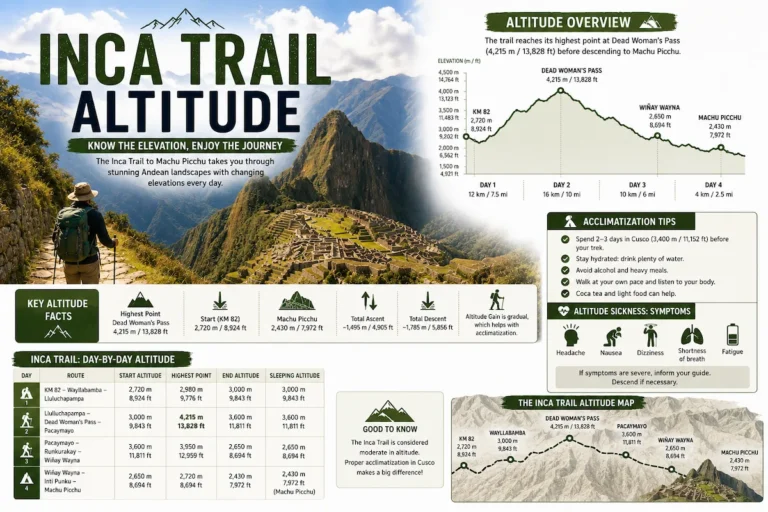
One of the biggest challenges on the Inca Trail is the altitude. The highest point of the trek is Dead Woman’s Pass, located at approximately 4,215 meters (13,828 feet) above sea level.
At this altitude, some hikers may experience:
- headaches
- nausea
- dizziness
- shortness of breath
- fatigue
In more serious cases, altitude sickness can become dangerous if symptoms are ignored.
This is one of the main reasons why travelers are strongly advised to spend at least two or three days acclimatizing in Cusco or the Sacred Valley before starting the hike.
Hiking too quickly, dehydration, and alcohol consumption before the trek can increase the risk of altitude-related problems.
Weather Risks on the Inca Trail
Weather conditions in the Andes can change very quickly. During the rainy season, trails may become muddy and slippery, increasing the risk of falls and injuries.
Heavy rain, fog, and cold temperatures can also make the hike more physically demanding.
The rainy season usually runs from November to March, with January often being one of the wettest months. Because of maintenance and safety reasons, the Inca Trail closes every February.
The dry season from April to October is generally considered safer and easier for hiking.
Are Hiking Accidents Common?
Serious accidents on the Inca Trail are relatively rare, but smaller injuries can happen.
Some hikers experience:
- slips on wet stones
- twisted ankles
- knee pain
- dehydration
- exhaustion
The trail contains thousands of uneven stone steps, especially near steep sections and mountain passes. During bad weather, these areas can become more dangerous.
Most accidents happen when hikers:
- move too quickly
- underestimate the altitude
- wear poor hiking shoes
- ignore physical warning signs
Is the Inca Trail Safe for Beginners?
Yes, many beginners complete the Inca Trail successfully every year.
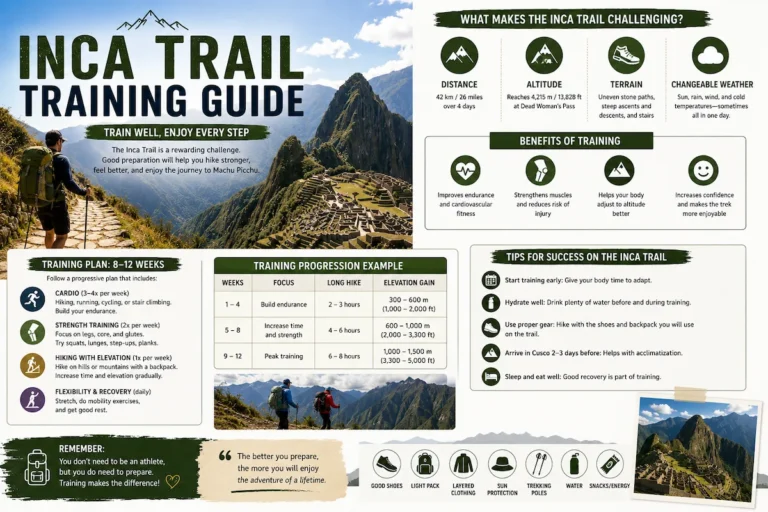
However, the hike should not be underestimated. Even though you do not need technical climbing experience, the trek still requires a reasonable level of fitness and preparation.
Travelers who exercise regularly and prepare for long walks usually adapt much better to the challenge.
Hiring a licensed tour operator is also very important because guides are trained to respond to altitude issues and emergencies along the route.
What Happens During Emergencies?
Because the Inca Trail passes through remote mountain areas, emergency evacuations can be difficult in some sections of the trail.
Guides and porters are trained to assist hikers experiencing altitude sickness or injuries, but severe emergencies may require evacuation by stretcher or helicopter depending on weather conditions and location.
This is one reason why travel insurance is highly recommended before hiking the Inca Trail.
How to Stay Safe on the Inca Trail
Most safety problems on the Inca Trail can be reduced with proper preparation.
Travelers should:
- acclimatize before hiking
- drink plenty of water
- hike at a comfortable pace
- avoid alcohol before the trek
- wear proper hiking shoes
- bring warm and waterproof clothing
- listen to their guides
Many hikers who struggle on the trail simply try to move too fast instead of allowing their bodies to adapt naturally to the altitude.
Is Dead Woman’s Pass Dangerous?
Dead Woman’s Pass is the most difficult section of the Classic Inca Trail because of its high altitude and steep climb.
The name itself often worries travelers, but the pass is not considered unusually dangerous when hikers are properly prepared.
Most people who complete the trail say this section is physically challenging but also one of the most rewarding parts of the journey because of the incredible mountain views.
Are Porters at Risk on the Inca Trail?
Conversations about Inca Trail deaths often include concerns about porters, who carry camping equipment and supplies along the trail.
In recent years, regulations have improved significantly to protect porters through:
- weight limits
- medical checks
- better equipment requirements
- stricter tour regulations
Responsible tour operators now place much greater importance on porter welfare and safety.
Inca Trail Safety vs Other Treks in Peru
| Trek | Difficulty | Altitude | Main Risk |
|---|---|---|---|
| Inca Trail | Moderate to difficult | High | Altitude and stairs |
| Salkantay Trek | Difficult | Very high | Cold weather and altitude |
| Lares Trek | Moderate | High | Remote mountain terrain |
| Short Inca Trail | Moderate | Lower | Physical hiking effort |
Compared to some alternative treks in Peru, the Classic Inca Trail is physically demanding but generally well organized and carefully regulated.
Should You Be Worried About Inca Trail Deaths?
For most healthy travelers, the answer is no.
The Inca Trail is not considered an extremely dangerous trek, especially when hikers prepare correctly and follow safety recommendations.
Most problems happen because travelers underestimate:
- the altitude
- physical effort
- weather conditions
With proper acclimatization, good equipment, and a responsible guide, the vast majority of hikers complete the trail safely and enjoy one of the most unforgettable experiences in Peru.
FAQs About Inca Trail Deaths
Have people died on the Inca Trail?
Yes. Deaths have occurred over the years due to altitude sickness, medical conditions, falls, and weather-related incidents.
Is the Inca Trail dangerous?
The Inca Trail is generally safe, but it is physically demanding and requires preparation.
What is the biggest danger on the Inca Trail?
Altitude sickness is one of the most common risks for hikers.
Is Dead Woman’s Pass dangerous?
It is the most challenging part of the trail because of the altitude, but most hikers complete it safely.
Can beginners hike the Inca Trail?
Yes, many beginners complete the trek successfully with proper preparation.
Is the Short Inca Trail safer?
The Short Inca Trail is generally easier because it avoids the highest mountain pass.