
What Is the Temple of the Sun in Machu Picchu?
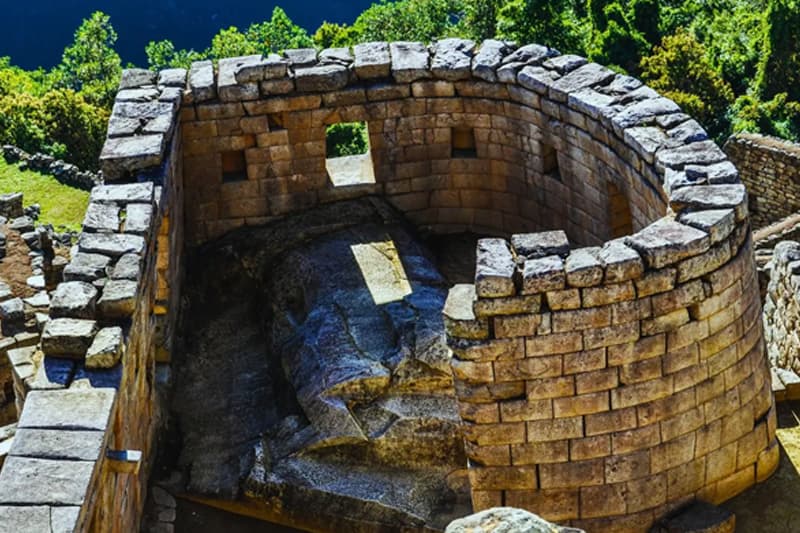
The Temple of the Sun, also known as Torreón, is a sacred Inca structure dedicated to the worship of the sun god Inti.
Unlike most rectangular Inca constructions, this temple features a curved, semi-circular design, built with finely cut stones that fit together perfectly without mortar, an architectural signature of elite Inca craftsmanship.
It was reserved for religious ceremonies and astronomical observations, making it one of the most exclusive and restricted spaces in Machu Picchu.
Location Within Machu Picchu

The Temple of the Sun is located in the Sacred District of Machu Picchu, near the main plaza and above a natural cave known as the Royal Tomb.
Its elevated position suggests its importance, both spiritually and strategically. From here, Inca priests could observe solar movements and perform rituals tied to agricultural cycles and seasonal changes.
Architectural Features That Make It Unique
Semi-Circular Design
The temple’s curved wall is built atop a large granite boulder, forming a structure that is both aesthetically impressive and structurally stable. This circular design is rare in Inca architecture and is believed to represent the sun itself.
Precision Stonework
The stones are so precisely cut that even today, centuries later, you cannot insert a knife between them. This technique is known as ashlar masonry and was reserved for the most sacred buildings.
Astronomical Windows
Two trapezoidal windows in the temple are perfectly aligned with solar events. One window captures the June solstice sunrise, while the other aligns with important celestial observations used in Inca calendars. These alignments show that the temple functioned as an astronomical observatory.
The Temple and Inca Astronomy
The Incas were master astronomers, and the Temple of the Sun played a key role in tracking solar cycles.
During the winter solstice in June, sunlight passes directly through one of the temple’s windows and illuminates a sacred stone inside. This event was likely used to mark the beginning of important agricultural periods.
Their understanding of astronomy was deeply tied to survival, helping them determine when to plant, harvest, and prepare for seasonal changes.
The Royal Tomb Beneath the Temple
Directly beneath the Temple of the Sun lies a carved cave often referred to as the Royal Tomb.
Although no royal remains were found, historians believe it served ceremonial or ritual purposes. The cave features carved altars, niches for offerings, and a symbolic connection between the underworld and the heavens.
This vertical relationship reflects the Inca worldview of three realms: Hanan Pacha as the upper world, Kay Pacha as the earthly world, and Ukhu Pacha as the underworld.
Spiritual and Religious Importance
The Temple of the Sun was not accessible to the general population. It was likely reserved for high priests, royal family members, and elite ceremonies dedicated to Inti.
Rituals performed here may have included offerings, sacrifices, and solar celebrations. The Incas believed the emperor was a descendant of Inti, making the temple a place of immense political and spiritual power.
Can You Visit the Temple of the Sun Today?
Yes, but with limitations.
Visitors cannot enter the Temple of the Sun directly to preserve its structure. However, you can view it from above, especially if you choose the right circuit.
Circuit 2 offers the best panoramic and close views, while Circuit 1 provides an elevated perspective.
Due to high demand, availability for Circuit 2 is often limited, especially in peak months.
Best Time to Experience the Temple
The temple can be visited year round, but your experience will vary depending on the season.
During the dry season from April to October, you can expect clear skies and excellent visibility, making it ideal for photography and observing sunlight alignment.
In the rainy season from November to March, the landscape becomes lush and green, with fewer crowds, although cloud cover may affect visibility.
If you want to better understand the temple’s astronomical significance, visiting around the June solstice provides a unique experience.
Why the Temple of the Sun Still Fascinates Travelers
The Temple of the Sun is more than just a structure. It represents advanced Inca engineering, deep spiritual beliefs, and sophisticated astronomical knowledge.
Even today, it continues to puzzle archaeologists and inspire travelers from around the world.
Tips for Visiting the Temple of the Sun
- Book your Machu Picchu tickets in advance
- Choose Circuit 2 if available
- Visit early in the morning for better light and fewer crowds
- Hire a knowledgeable guide to understand its significance
- Bring a camera with zoom for detailed shots
Temple of the Sun vs Other Structures in Machu Picchu
While Machu Picchu has many iconic sites, the Temple of the Sun stands out for its precision and purpose.
It is more refined than residential buildings, more symbolic than agricultural terraces, and more exclusive than public plazas.
It shares importance with other sacred sites like the Intihuatana stone and the Temple of the Three Windows.
Frequently Asked Questions
What was the Temple of the Sun used for?
It was used for religious ceremonies and astronomical observations dedicated to the sun god Inti
Can you enter the Temple of the Sun?
No, entry is restricted, but you can view it from designated areas
Why is it semi circular?
The shape likely symbolizes the sun and enhances its astronomical alignment
Is it included in all Machu Picchu tickets?
Not all, visibility depends on the circuit you choose
When is the best time to visit The Temple of the sun in Machu Picchu?
The dry season from April to October, especially around the June solstice