
Is November a Good Time for the Inca Trail?
Yes — for many travelers, November is actually one of the best months to hike the Inca Trail.
November is considered a transition month between the dry season and the rainy season. While rainfall becomes more frequent compared to June or July, the trail remains open, beautiful, and far less crowded.
The biggest advantages include:
- Fewer tourists
- Better permit availability
- Greener mountain scenery
- Cooler hiking temperatures
- More peaceful campsites
- Dramatic cloud forest landscapes
If you don’t mind occasional rain showers, November can be an incredible month for the trek.
Inca Trail Weather in November
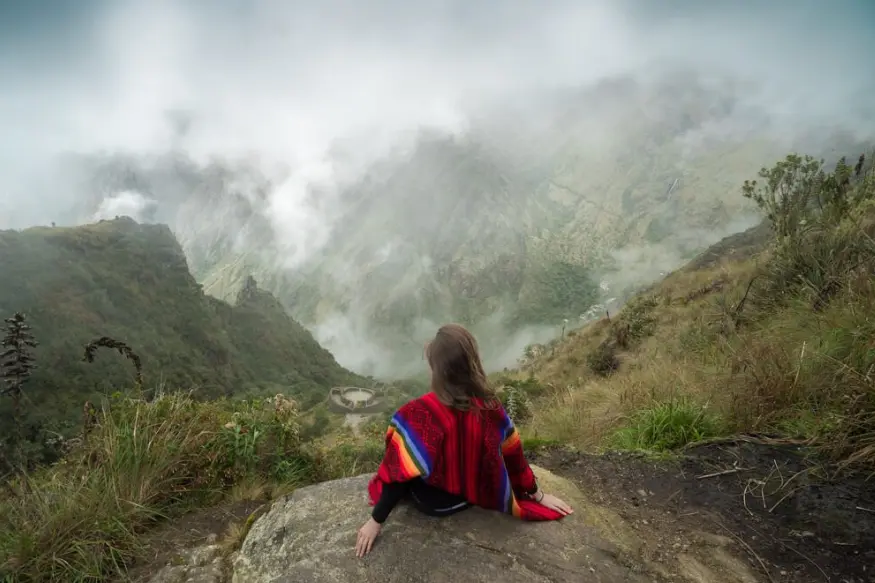
The weather on the Inca Trail in November can change quickly throughout the day.
Most hikers experience:
- Sunny mornings
- Cloudy afternoons
- Occasional rain showers
- Cool nights at higher elevations
- Fog near mountain passes
Rain usually becomes more common toward the second half of November.
However, unlike January or February, it rarely rains nonstop all day.
Average Temperatures on the Inca Trail in November
| Location | Day Temperature | Night Temperature |
|---|---|---|
| Cusco | 18°C–21°C (64°F–70°F) | 5°C–7°C (41°F–45°F) |
| Inca Trail Campsites | 10°C–18°C (50°F–64°F) | 0°C–5°C (32°F–41°F) |
| Machu Picchu | 18°C–24°C (64°F–75°F) | 10°C–12°C (50°F–54°F) |
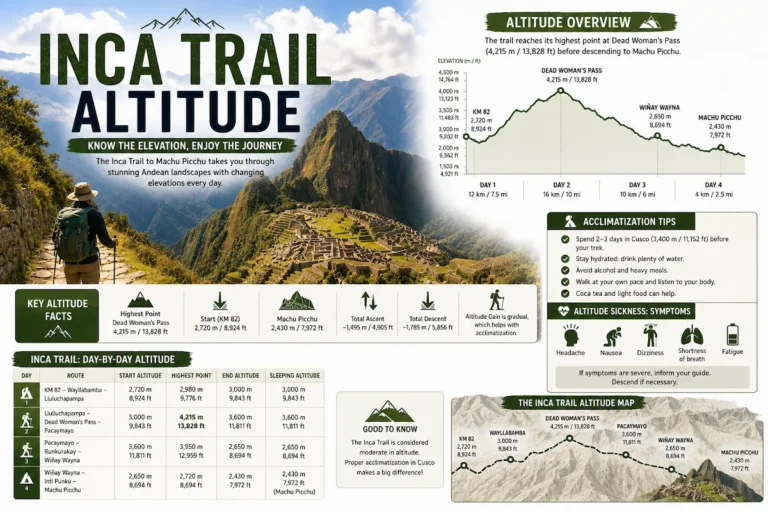
The coldest area is usually Dead Woman’s Pass during the early morning or evening.
The highest point of the trek reaches:
4215 meters ≈ 13,828 feet
Because of the altitude, temperatures can feel much colder at night.
Advantages of Hiking the Inca Trail in November
Fewer Crowds
One of the biggest reasons travelers choose November is the reduced number of hikers.
Peak season months like:
- June
- July
- August
are extremely crowded.
In November, the trail feels quieter and more natural.
You’ll enjoy:
- Less crowded campsites
- Better photo opportunities
- More peaceful archaeological sites
- A calmer Machu Picchu experience
For many hikers, this makes the trip far more enjoyable.
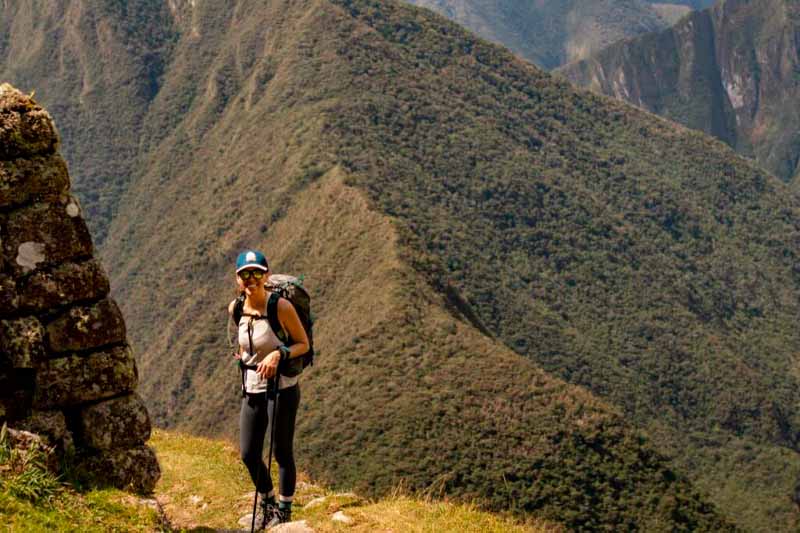
Greener Landscapes
By November, the first rains begin transforming the Andes.
The mountains become greener, rivers become stronger, and the cloud forest sections look spectacular.
This is one of the best months for:
- lush scenery
- dramatic photography
- cloud forest views
- vibrant mountain colors
Areas like Wiñay Wayna and Phuyupatamarca become especially beautiful during this season.
Easier Permit Availability
Compared to peak season, Inca Trail permits are usually easier to obtain in November.
The Peruvian government strictly limits access to the trail, allowing only about 500 people daily, including guides and porters.
That means tourist spots are limited.
However, November rarely sells out as quickly as:
- May
- June
- July
- August
Still, booking early is highly recommended.
How Far in Advance Should You Book?
For the Classic Inca Trail in November, booking:
- 3 to 5 months in advance is ideal
For the Short Inca Trail:
- 2 to 4 months ahead is usually enough
Luxury Inca Trail tours may require earlier reservations due to limited premium services.
Disadvantages of the Inca Trail in November
Higher Chance of Rain
Rain is the main disadvantage of hiking in November.
Some afternoons may include:
- short showers
- fog
- muddy trails
- slippery stone steps
Because of this, proper waterproof gear becomes essential.
Cloudier Mountain Views
November can bring fog and low clouds, especially near:
- Dead Woman’s Pass
- Runkurakay
- Sun Gate
However, many mornings are still clear and beautiful.
The changing clouds actually create a mystical atmosphere around Machu Picchu that many travelers love.
Wet Camping Conditions
Campgrounds may become damp after evening rain.
A waterproof duffel bag and rain cover are extremely important during this month.
How Difficult is the Inca Trail in November?
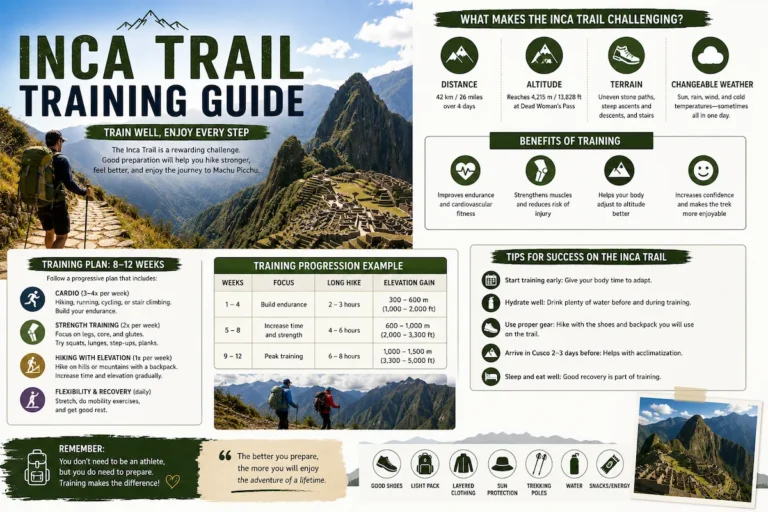
The Inca Trail is always considered a moderate to challenging trek.
In November, rain can increase the difficulty slightly because the terrain becomes more slippery.
The most difficult parts include:
- steep stone staircases
- high altitude sections
- long hiking distances
- muddy descents after rain
The second day is usually the hardest because hikers cross Dead Woman’s Pass.
Is Altitude Sickness Worse in November?
No.
Altitude affects travelers similarly throughout the year.
The best way to reduce symptoms is proper acclimatization in Cusco before starting the trek.
Most experts recommend:
- spending at least 2 days in Cusco
- drinking plenty of water
- avoiding alcohol
- eating light meals
- resting properly before the hike
What to Pack for the Inca Trail in November
Packing correctly is extremely important for November conditions.
Essential Clothing for November
You should bring:
- Waterproof hiking jacket
- Rain poncho
- Waterproof hiking pants
- Thermal layers
- Warm fleece jacket
- Quick-dry hiking shirts
- Warm gloves
- Wool hat
- Extra hiking socks
Layering is essential because temperatures change constantly during the trek.
Essential Hiking Gear
Important gear includes:
- Waterproof hiking boots
- Trekking poles
- Backpack rain cover
- Dry bags
- Headlamp
- Portable charger
- Reusable water bottle
Most operators recommend keeping your daypack under:
5 kg ≈ 11 lb
What Does Machu Picchu Look Like in November?
Machu Picchu in November looks incredibly green and mystical.
You’ll often see:
- clouds moving through the ruins
- fog surrounding the mountains
- lush vegetation
- dramatic sunrise conditions
This creates the famous “lost city in the clouds” atmosphere.
Photography conditions can be spectacular.
Is the Inca Trail Open in November?
Yes.
The Inca Trail operates normally throughout November.
The only month the trail officially closes is February for maintenance and conservation work.
Best Alternative Treks if Permits Sell Out
Expert Tips for Hiking the Inca Trail in November
Start Hiking Early
Morning weather is usually much clearer.
Most rain arrives during the afternoon.
Protect Your Electronics
Always use waterproof bags for:
- phones
- cameras
- batteries
- documents
Humidity can damage electronics quickly.
Bring Quality Hiking Boots
Good waterproof boots are one of the most important items for November trekking conditions.
Avoid brand-new boots that haven’t been broken in.
Prepare for Rapid Weather Changes
The Andes are unpredictable.
You may experience:
- sun
- rain
- wind
- fog
all within the same day.
Is the Inca Trail in November Worth It?
Absolutely.
For travelers seeking:
- fewer crowds
- greener landscapes
- easier permit availability
- dramatic scenery
- peaceful trekking conditions
November is one of the best months to hike the Inca Trail.
While rain becomes more common, the rewards are incredible:
- lush mountains
- mystical cloud forests
- quieter campsites
- unforgettable Machu Picchu views
Many experienced hikers actually prefer November over the crowded peak season months.
Inca Trail Tours You Can Book
If you are planning your adventure to Machu Picchu, these are some of the most popular trekking options:
FAQs About the Inca Trail in November
Does it rain every day in November?
No. Rain is usually intermittent and often arrives in short afternoon showers.
Are permits easier to get in November?
Yes. November generally has better permit availability compared to peak season months.
Is November cold on the Inca Trail?
Nights can be cold at high altitude, especially near mountain passes.
Warm layers are essential.
Is the trail slippery in November?
Yes, some sections become slippery after rain, especially stone staircases.
Waterproof hiking boots are very important.
Is November a good month for photography?
Yes. November offers:
- green landscapes
- dramatic clouds
- misty mountains
- fewer tourists in photos
It’s one of the best months for atmospheric photography.